Garden Maintenance in Newham

Garden maintenance in Newham should keep outdoor spaces tidy, healthy and usable through the changing seasons. Our service covers routine care for domestic gardens and shared exterior areas, with attention to the work that keeps planting beds, lawns, paths and boundaries in good order. We focus on regular upkeep rather than one-off cosmetic fixes, so the garden stays manageable and looks considered throughout the year.
That can include mowing, edging, hedge trimming, weeding, light pruning, clearing leaves and keeping growth from overwhelming borders or access routes. The right combination depends on the size of the space, the planting style and how often it is used. Practical maintenance is usually about steady, timely tasks carried out before minor issues become bigger ones, and about keeping the garden easy to enjoy without unnecessary disruption.
If you want to make arrangements for your garden, request a quotation when you are ready and we can discuss what the site needs.
Routine care for lawns, borders and tidy edges
Keeping a garden in shape usually starts with the most visible surfaces. Lawns need mowing at the right height, not just when they begin to look long, and borders benefit from weed control that is consistent rather than sporadic. Edges and paths often define whether a space looks looked after, so regular attention to these details can make the whole garden feel sharper without changing its layout.
Our maintenance work is suited to gardens that need ongoing support rather than a complete redesign. We can keep grass areas neat, clear debris after windy weather, manage overgrowth around fence lines and maintain a cleaner finish around patios and entrance routes. If planting is already established, the aim is to preserve shape and structure while reducing the sort of growth that makes later work more difficult.
Lawn mowing may be the right starting point where grass is the main feature, while hedge work and broader upkeep can sit alongside it when the garden needs a fuller visit. Hedge trimming is especially useful where boundary planting is beginning to shade beds, narrow access or lose a crisp outline.
Seasonal maintenance and hedge control

Seasonal changes affect how a garden should be maintained, especially where shrubs, hedges and mixed planting are involved. In spring and summer, growth can quickly become vigorous; in autumn, leaves and soft debris may build up across lawns and hard surfaces; in winter, attention often shifts to keeping access clear and reducing the weight of untidy growth. A sensible maintenance plan works with those changes rather than fighting them.
Hedges need more than a quick cut if they are to keep a consistent line. We trim for shape, density and sensible clearance, taking care not to force a hedge into an unnatural form unless that is already appropriate to the planting. Where a hedge has become too high or too broad, the work may need to be staged so the plant remains manageable and the result looks balanced. That kind of measured approach is often better than over-cutting in a single visit.
For gardens that require broader upkeep beyond hedges, our garden maintenance service brings the routine tasks together in one place. If the site has areas that are difficult to keep under control, garden clearance can deal with build-up before regular maintenance resumes, especially where the space needs a stronger reset.
What a maintenance visit can cover
Every garden is different, so maintenance needs to be tailored to what is actually present. A straightforward visit might focus on mowing, weeding and cutting back soft growth. A more involved visit might also include light pruning, leaf removal, tidying along wall bases and clearing edges where grass or plants have spread beyond their intended areas. The common thread is keeping the garden orderly without unnecessary disturbance.
Useful tasks are often selected in combination, and a sensible plan can save time later. A maintained space is generally easier to enjoy, easier to inspect and less likely to develop hidden problems. If there are seasonal plants or compact spaces, the finish should remain neat without stripping away the character of the garden. Maintenance is about good judgement as much as it is about effort.
Typical maintenance decisions include:
- how often the lawn should be cut to suit the season and the grass type
- whether hedges need shaping, reduction or only a light tidy
- which borders are best cleared by hand rather than cut back heavily
- how much leaf collection or debris removal is needed after the visit
Supporting healthier growth over time
Good maintenance does more than improve appearance for the day. It helps protect the underlying condition of a garden by keeping light, space and airflow where they are needed. When growth is left unchecked, lawns can become patchy, shrubs can crowd one another and weeds can compete with planted areas. Regular upkeep reduces that pressure and keeps the garden easier to manage.
Pruning and trimming should be done with the plant in mind, not simply to shorten everything in sight. Some species respond well to light shaping, while others need a more careful cut and a better understanding of their growth habit. Where there are mixed borders, maintenance may involve selective work rather than uniform cutting, which preserves form and avoids damaging growth that should remain intact.
Landscape gardening may be relevant where the garden needs a broader refresh alongside routine care, especially if the planting or layout has started to work against the practical use of the space. Where hard landscaping features are already present, a combined approach can help the whole garden feel more coherent.
Clearance, cutting back and tidy finishes
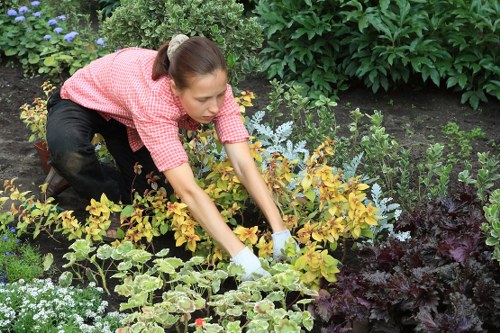
Some gardens need maintenance that goes beyond standard routine work. Over time, fallen branches, cuttings, dead growth and leaf litter can build up and make the space feel untidy even when the underlying layout is sound. In those cases, we can clear the surplus material first and then bring the garden back to a level where regular upkeep becomes straightforward again.
A tidy finish depends on what happens after the main cutting work. Borders should be left with clean edges, hard surfaces should be free of loose debris and green waste should not be left to drift into corners. That final stage matters because it shows the difference between a basic cut and a properly finished maintenance visit. It also makes the space easier for the owner to use immediately after the work is done.
Where overgrowth is blocking access or reducing usability, garden clearance may be the appropriate first step. If taller growth is the main issue, tree lopping and removal can address larger obstacles that ordinary maintenance does not cover, while keeping the garden safe and better proportioned.
How to prepare for a quotation
When you ask for a quotation, it helps to give a clear picture of the work you want covered. A short description of the garden, the main areas that need attention and any access points is usually enough to start. If there are particular concerns such as dense hedging, a neglected border or a lawn that has not been cut for some time, mention those directly so the scope is easier to understand.
Photographs can also be useful when the space is difficult to describe in words, especially if there are several sections or if parts of the garden are hidden from view. It can be helpful to note whether you want a one-off tidy, a more regular arrangement or a combination of maintenance tasks. That makes it easier to discuss a sensible plan without adding unnecessary work.
For straightforward details about service options and pricing factors, see pricing and quotes. If you are ready to compare what is involved, use the information you have to ask for a quotation and we can take the next step with you.
About Newham
Newham is a borough in east London formed in 1965 from the merger of the former county boroughs of East Ham and West Ham. It sits on the north bank of the Thames and includes a mix of long-established residential districts, major transport links and large redevelopment areas. The borough contains places that reflect different layers of London’s history, from older parish settlements to later industrial growth and 20th-century housing estates. Stratford is one of its best-known centres, especially after the extensive regeneration linked to the 2012 Olympic and Paralympic Games, while areas such as East Ham, Forest Gate and Plaistow retain strong local identities of their own. The borough is also notable for its diversity, with communities shaped by migration over many decades. Green space appears in a number of forms, including municipal parks, smaller local gardens and the Lea Valley corridors on the borough’s edge. West Ham Park, one of the larger open spaces, has long served as a public park with formal planting and recreational facilities. The Royal Docks area adds a very different character, where historic dockland infrastructure sits alongside modern development and waterside routes. Across Newham, architecture ranges from Victorian terraces and interwar streets to contemporary residential and commercial buildings, creating a varied urban setting rather than a single uniform townscape. The result is a borough with a strong sense of contrast: densely built in many places, but still marked by parks, trees, waterways and leftover traces of older landscapes.
Regular upkeep for busy domestic gardens
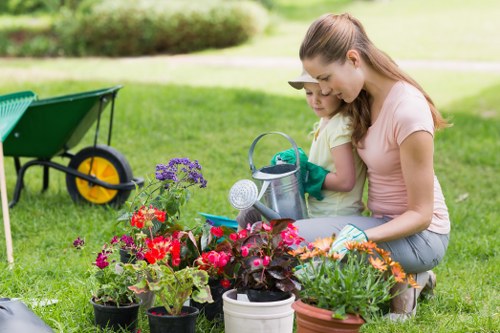
Domestic gardens often work best when maintenance is routine rather than reactive. Grass that is cut consistently tends to stay more manageable, and shrubs that are lightly shaped can usually be kept within their intended footprint. This approach is especially useful where a garden is used for seating, play or simple day-to-day movement, because the space remains practical as well as presentable.
We can combine several tasks in one visit so the work is sensible and efficient. That might mean clearing leaves, trimming edges, reducing soft overgrowth and tidying the parts of the garden that are most visible from the house. In a shared or front garden setting, these jobs often matter because the outside space forms the first impression of the property and should look orderly without needing constant attention.
services overview gives a broader summary if you want to compare the maintenance work with related outdoor services. For sites where hard surfaces, structure and planting all need attention, landscaping may be more suitable than maintenance alone.
Hedges, shrubs and boundary planting
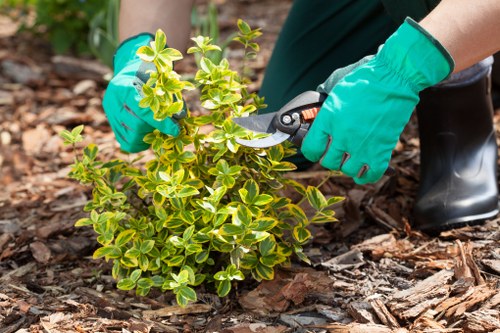
Boundaries can dominate a garden when hedge growth is left to spread unchecked. Well-maintained hedges provide definition, privacy and a tidy frame for the rest of the space, but they also need the right timing and finish to remain attractive. Shrubs and boundary plants may need light shaping, selective reduction or careful cutting back depending on how established they are and how much room they have to grow.
We handle this sort of work with an eye on the structure of the planting, not just the outline it creates. A hedge that has become too wide may need gradual correction, while younger planting may need only a light trim to help it fill out evenly. The same thinking applies to shrubs near pathways or entrances, where the goal is to maintain space for movement without making the area look bare or stripped.
For boundary work that sits alongside broader upkeep, hedge trimming can be used on its own or as part of a more complete maintenance visit. If you need a quote for a garden that has grown beyond simple trimming, send the details and we will help you identify the right mix of work.